

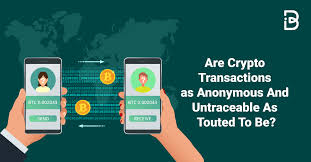
Bitcoin has become a popular choice for individuals seeking secure and anonymous transactions. As the first and most well-known cryptocurrency, Bitcoin offers a decentralized and transparent platform that allows users to send and receive money without the need for a central authority like a bank. However, while Bitcoin can provide a degree of privacy, achieving true anonymity requires careful attention to how you use the currency. In this article, we’ll explore how to use Bitcoin for secure and anonymous transactions, ensuring your financial activities remain private and protected.
1. Understanding Bitcoin’s Privacy Features
Before diving into the specifics of secure and anonymous Bitcoin transactions, it’s important to understand how Bitcoin’s privacy features work. Bitcoin transactions are recorded on a public ledger known as the blockchain, where every transaction is visible to anyone with internet access. This transparency is one of Bitcoin’s strengths, but it also means that, by default, Bitcoin is not completely anonymous.
Instead of anonymity, Bitcoin provides what is known as pseudonymity. This means that while your transactions are public, they are associated with an alphanumeric address (your Bitcoin wallet) rather than your personal identity. However, if your Bitcoin address is ever linked to your real identity (through an exchange, for example), your transactions can be traced back to you.
Key Takeaway:
- Bitcoin offers pseudonymity, not full anonymity; transactions are visible but linked to a Bitcoin address, not directly to your identity.
2. Using a Secure Bitcoin Wallet
The first step in ensuring secure and anonymous Bitcoin transactions is to choose a secure Bitcoin wallet. A Bitcoin wallet is a software application that stores your private keys, which are used to sign transactions and access your Bitcoin.
For better security and privacy, consider using a non-custodial wallet, which means you control your private keys. Custodial wallets, such as those provided by exchanges, hold your keys for you, which means they can access your funds and may require personal information for account creation.
To enhance your anonymity, you should also consider using a wallet that supports advanced privacy features, such as CoinJoin, which is a method of mixing multiple transactions together to obscure the trail of individual transactions.
Key Takeaway:
- Use a non-custodial wallet to maintain control over your private keys and enhance your security.
- Consider wallets with privacy features like CoinJoin for better anonymity.
3. Avoiding KYC-Compliant Exchanges
Know Your Customer (KYC) regulations require exchanges to verify the identities of their users. While this is important for preventing illegal activities, it also means that your Bitcoin transactions can be traced back to you if you purchase Bitcoin through a KYC-compliant exchange.
To maintain anonymity, consider using peer-to-peer (P2P) platforms like Bisq or Hodl Hodl, which do not require KYC information. These platforms connect buyers and sellers directly, allowing you to purchase Bitcoin without providing personal identification. Additionally, Bitcoin ATMs, which are available in many locations worldwide, can be used to buy Bitcoin with cash, further reducing the traceability of your transactions.
Key Takeaway:
- Avoid KYC-compliant exchanges if you want to keep your transactions anonymous.
- Use P2P platforms or Bitcoin ATMs to purchase Bitcoin without revealing your identity.
4. Using Mixing Services
Bitcoin mixing services, also known as tumblers, can further enhance your transaction anonymity. These services work by pooling Bitcoin from multiple users and then redistributing it in a way that makes it difficult to trace the original source of the funds. Essentially, they “mix” your Bitcoin with others, breaking the transaction trail.
However, it’s important to use reputable mixing services, as some have been known to scam users or even cooperate with law enforcement. Also, be aware that using mixing services might attract scrutiny from exchanges or other platforms, as it can be seen as an attempt to launder money.
Key Takeaway:
- Mixing services can obscure the transaction trail and enhance anonymity, but choose reputable services to avoid risks.
5. Best Practices for Secure and Anonymous Bitcoin Transactions
In addition to the strategies mentioned above, there are several best practices you should follow to maximize your security and anonymity when using Bitcoin:
- Use a VPN or Tor: When conducting Bitcoin transactions, use a Virtual Private Network (VPN) or the Tor browser to hide your IP address, adding an extra layer of anonymity.
- Generate New Addresses: Always generate a new Bitcoin address for each transaction. This prevents anyone from linking multiple transactions to the same address.
- Keep Personal Information Separate: Avoid linking your Bitcoin activities to any personal information. For example, don’t use the same email address for Bitcoin-related activities that you use for other services.
- Be Cautious with Public Wi-Fi: Avoid using public Wi-Fi networks when making Bitcoin transactions, as these networks are more vulnerable to hacking.
Key Takeaway:
- Use a VPN or Tor to hide your IP address when transacting.
- Generate new addresses for each transaction to prevent traceability.
While Bitcoin offers a degree of privacy, achieving true anonymity requires careful attention to how you use it. By selecting a secure, non-custodial wallet, avoiding KYC-compliant exchanges, and using mixing services, you can significantly enhance your privacy. Additionally, following best practices such as using a VPN, generating new addresses, and separating your Bitcoin activities from your personal information will help keep your transactions secure and anonymous.
As the landscape of digital currencies continues to evolve, it’s important to stay informed about new tools and techniques for maintaining privacy and security. With the right strategies, you can use Bitcoin confidently, knowing that your financial activities remain private and protected. You can search for different books.
